
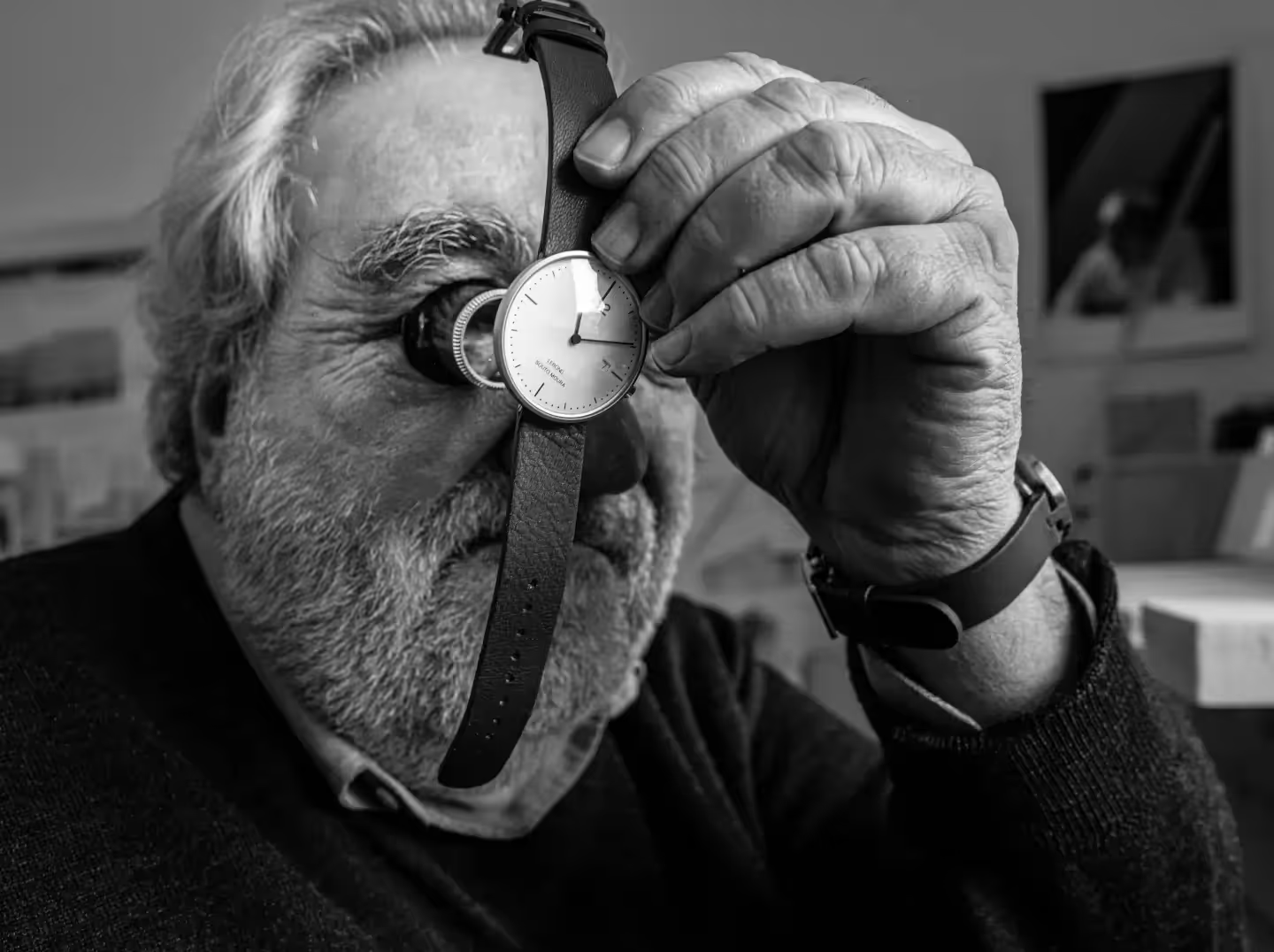
In an era when the watch world often recycles familiar forms and aesthetics, Lebond stands as a refreshingly bold departure. This is not just a watch brand it’s a conversation between architects and horologists, between space and seconds, between form and function.
Lebond is less about tradition and more about translation: translating architectural vision into a wrist-worn object. The result? Timepieces that do more than tell time they evoke structure, clarity, and design discipline.
A New Blueprint
Founded by Spanish architect Asier Mateo in Barcelona, Lebond emerged from a simple yet striking idea: to invite acclaimed architects to design watches, and then to manufacture them to Swiss-made standards. In a way, the brand treats each watch as a micro-architecture—every line, surface and volume considered with an architect’s eye.
Mateo, trained in design and fascinated by both horology and built space, designed the brand to sit at the intersection of those worlds. His vision: use architecture’s clarity and discipline to reshape how a watch can look, feel and function.
Collaboration as Core
What sets Lebond apart is the calibre of its collaborators. Rather than applying a design-studio aesthetic in-house, Lebond invites architects many of them laureates of the Pritzker Architecture Prize to lead the creative process. That means the shape of the case, the choice of materials, even the method of strap attachment are conceived as architectural gestures.
Take the debut model: the Lebond Siza, designed by Portuguese architect Álvaro Siza. The watch took its cues from his iconic 1966 Leça swimming-pool project, adopting a square case and minimalist detail to mirror the structural clarity of Siza’s architecture.
Then came the Lebond Souto Moura, created with architect Eduardo Souto de Moura. Here the design becomes even more radical: a round case is given a 30-degree rotated dial and crown configuration, aligning ergonomics with architecture in the most literal sense.
Each model is not a reinterpretation, but a fresh exploration one architect, one edition, one idea. In the collector’s landscape, that singular mindset is rare and compelling.
Materials, Function and Intellect
Under the architectural surface, Lebond watches are built with serious horological intent. Grade 5 titanium cases, Swiss automatic movements (such as the ETA 2892-A2), sapphire crystals front and back all the respect and discipline of fine watchmaking.
But these elements aren’t just technical they’re narrative. The use of titanium reflects the architect’s preference for strength-to-weight and subtle texture; the case finish, often micro-sanded matte with anti-fingerprint coating, echoes architectural surfaces rather than polished showpieces.
Design choices such as dial configuration, strap integration and even the way numerals are printed are considered with the same logic as an architectural plan. In the Souto de Moura model, the crown is repositioned and the hour markers slimmed to underline clarity, legibility and elegant function more architecture than ornament.
In other words: wearability meets intellectual rigour. Lebond doesn’t sacrifice comfort for concept. The watches are thin, light, tactile, and built to be worn, not simply admired.
Expressing Identity, Not Branding
Lebond’s appeal lies in its quiet confidence. There are no overt logos, no echoes of heritage or celebrity. Instead, the design speaks. This is a brand for people who understand that the best objects don’t shout they reveal.
Collectors attracted to Lebond tend to appreciate more than just the movement inside not that the movement isn’t excellent it’s that the watch sits at the nexus of design culture, architecture, and horology. It’s a piece that rewards contemplation and everyday use.
In many ways, Lebond inhabits a category of its own: not mass-luxury, not vintage homage, but “timewear” designed with architecture in mind.
For Retailers & Collectors
From a retail perspective, Lebond offers a differentiated story. The retail message is clear: “Swiss-made mechanical watches designed by Pritzker-Prize architects.” That in itself is a powerful lead.
For collectors, the limited-edition nature, architect signature, and design pedigree create a sense of scarcity and intellectual ownership. These are not broad-market watches they’re pieces of design culture.
At the price point (circa €2,700 for Siza/Souto de Moura editions) the positioning is accessible to serious collectors, yet elevated enough to retain exclusivity.
As the Australian and Asia-Pacific distributor for Lebond, Certified Horology is able to deliver both the product and the story: architecture, materials, movement, collaboration all in one package.
Why It Matters
In a world saturated with watches that often feel derivative, Lebond reminds us that design still matters. That form still communicates. That a watch can reflect the spatial, conceptual and human frameworks of architecture.
By merging precise engineering with emotional clarity, Lebond gives collectors something more than a timepiece they gain a concept. In doing so, the brand is redefining what it means to wear design.
If you believe that watches are about more than just mechanisms if you believe they are statements of taste, structure, intellect then Lebond deserves a place in your rotation.